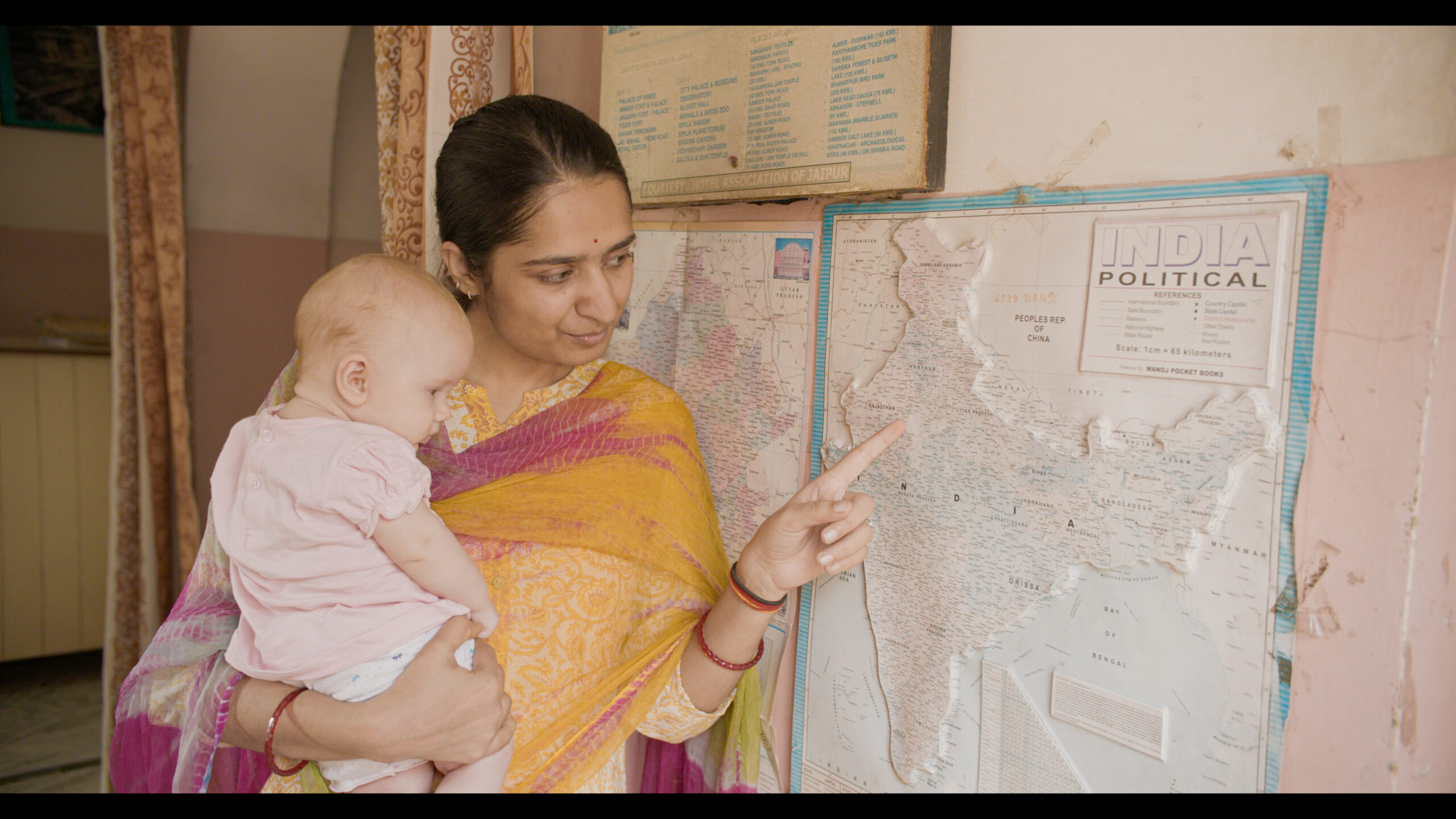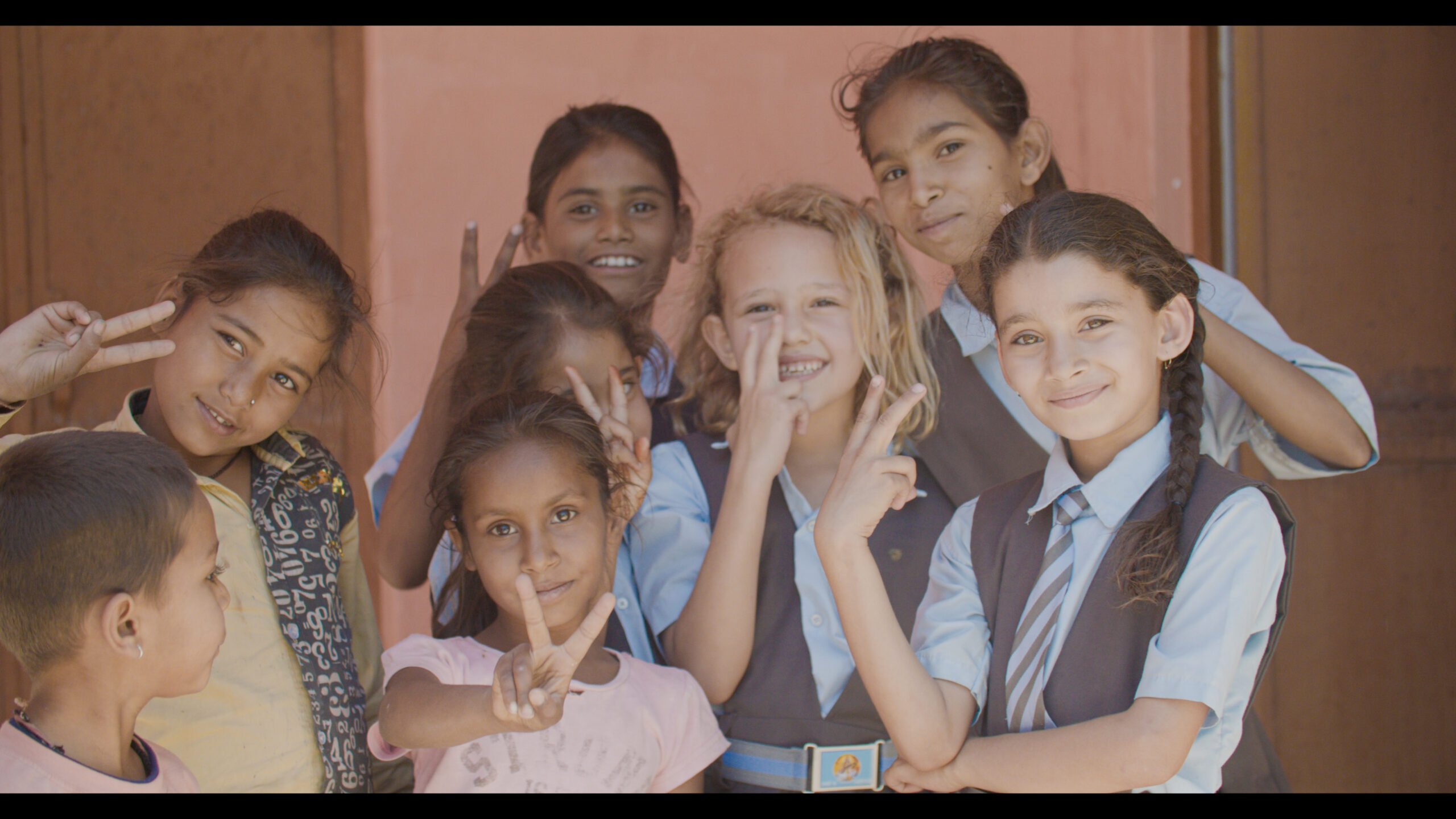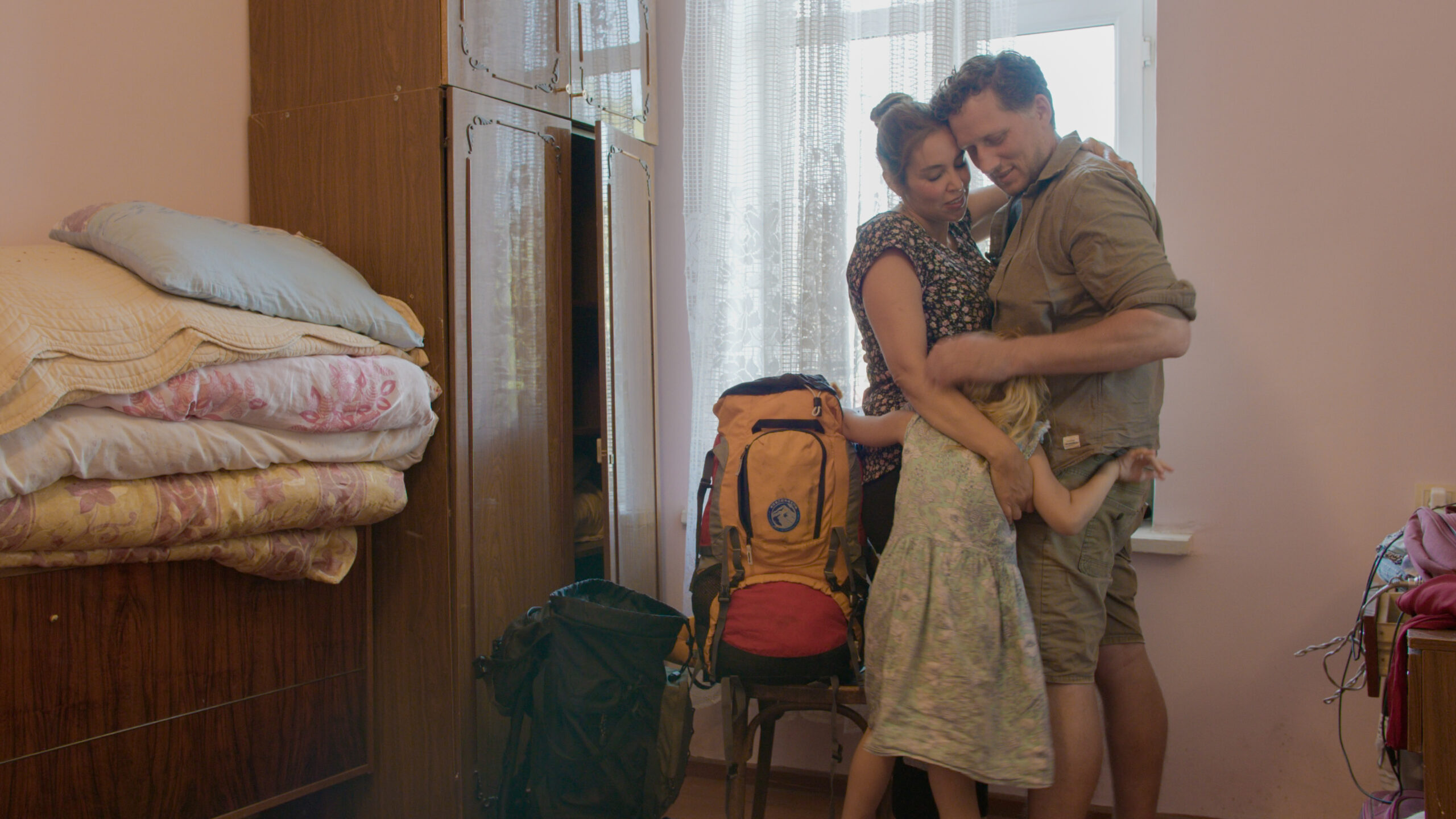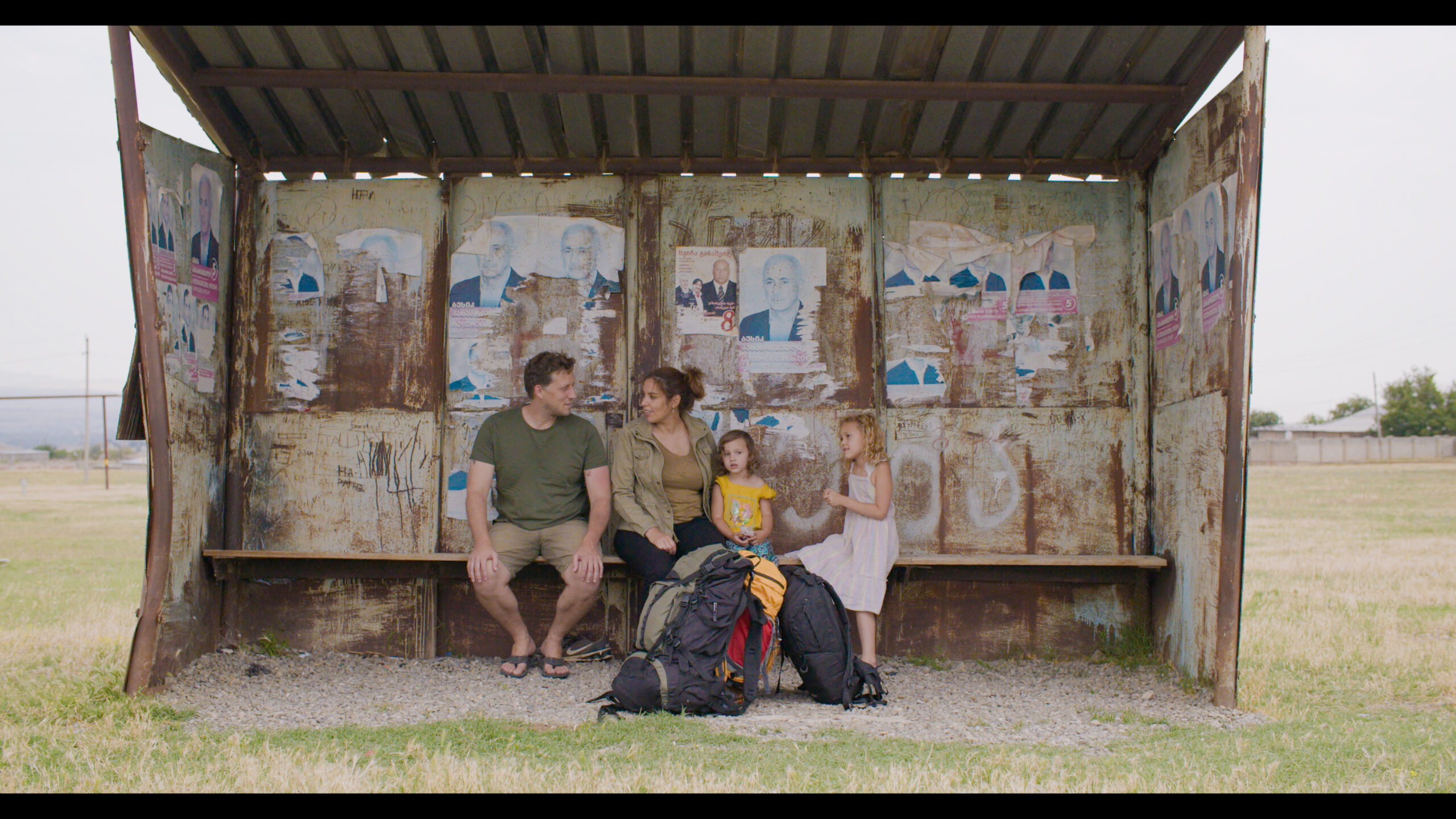
In late March 2022 Timo Götz and Salima Oudefel pack their backpacks and set off from Germany towards Asia with their two daughters Emilia and Elina — no fixed destination, no plan for the route. The journey takes them through Europe and Turkey into Georgia, where a man drives them all the way to the Iranian border. One planned month in Iran turns into three. On 1 October 2022 the family reaches India.
Two months into the trip they learn that Salima is pregnant. They keep travelling. In Goa, where a German midwife runs a birth centre, their daughter Enya is born — a calm, peaceful birth.
Shortly after, the trouble begins. The newborn needs a permit to leave the country. Weeks and months pass, always with a new promise. The German embassy cannot help. After many months comes the shocking news: the family is accused of surrogacy. Ultrasound scans, photos and blood tests do not refute the accusation. For months they are not allowed to leave Delhi, money runs short, they change accommodation every few days, the visa expires.
Finally, through a contact, they get the papers — and only days to leave the country. They cross into Nepal and breathe again for the first time in months.
Instead of flying home, they decide against their family’s advice to return overland. 3,000 kilometres through Kazakhstan, a transit through Russia, back to Georgia, by ship across the Black Sea to Bulgaria — and the last 2,000 kilometres home by bus. Out of 300 hours of footage came two hours of film.